
Setting up a home boxing corner requires careful consideration of both your training space and your gear. When working out alone without a coach to monitor your form, your choice of punching bag gloves is your primary defense against hand and wrist injuries. The ideal glove for your home gym depends on your specific training goals, the type of bag you use, and how you manage the intense tropical heat and humidity during high-intensity sessions.
Selecting the wrong gear can lead to joint strain, skin abrasions, or premature wear of your equipment. By matching your gloves to your training style and bag setup, you can ensure a safe, effective, and sustainable home workout routine.
Assess Your Training Goals and Bag Type
Before purchasing any gear, you must define your primary workout focus. If your goal is cardiovascular conditioning and high-volume punching, your hands will require different protection than if you are focusing on raw power development or mixed martial arts transitions. High-impact power training demands dense padding to absorb heavy shock, while technical speed work requires lighter, more responsive gear that allows you to focus on hand speed and coordination.
Products mentioned in this guide
![IN STOCK]EVERLAST Boxing Punching Gloves 1 Pair for adults Professional Training Muay Thai MMA](https://img.lazcdn.com/g/p/2b634e5edcea53a18fb0ec5fc44976d6.jpg_400x400q80.jpg_.webp)
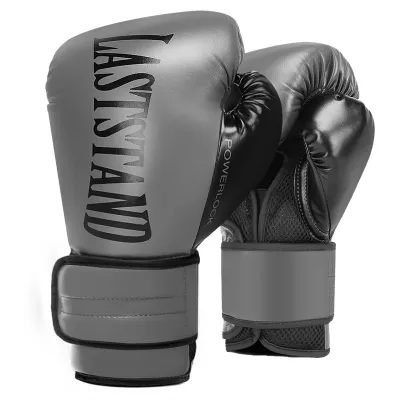
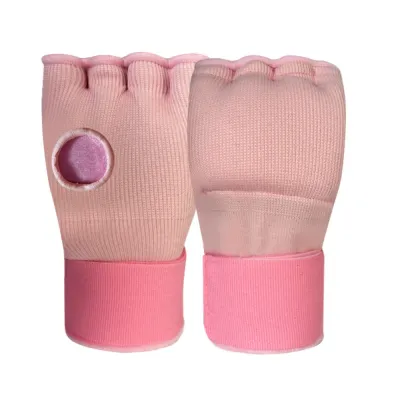
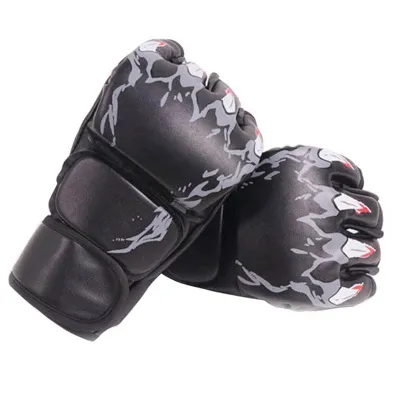
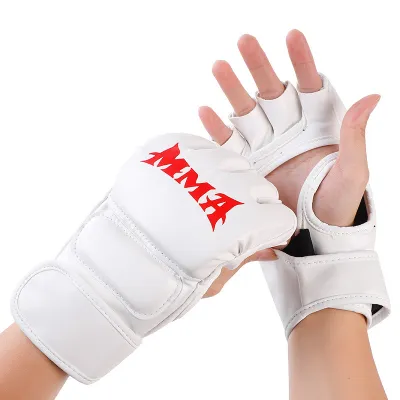
Prices are valid at publication and may change. Please refer to the product page for the latest price.
The type of punching bag hanging in your home also dictates your glove requirements. Standard heavy bags, which typically weigh between 70 to 100 pounds and are filled with compressed rags or synthetic materials, present a highly resistant surface that requires substantial knuckle protection. Conversely, speed bags and double-end bags are designed for rhythm, timing, and hand-eye coordination; these lightweight, air-filled targets require minimal padding but benefit from gloves that offer high mobility.
Training at home without immediate professional supervision means you must be highly sensitive to physical warning signs. Persistent wrist pain, soreness in the knuckles, or bruising after a workout are clear red flags that your current setup is inadequate. These symptoms often point to insufficient glove padding, poor wrist stabilization, or improper punching technique, all of which must be addressed to prevent long-term joint damage.
Bag Gloves vs. Training Gloves vs. MMA Gloves
Understanding the structural differences between the three primary glove categories allows you to make an informed decision based on your home workout environment.

Bag Gloves
Traditional bag gloves are engineered specifically for repetitive impact against heavy bags. They feature dense, highly compressed foam padding that does not bottom out under hard impact, protecting your knuckles from the solid resistance of a heavy bag. Many modern bag gloves also incorporate a pre-curved design that helps you maintain a natural fist, reducing muscle fatigue during long solo sessions. However, because the padding is so dense, these gloves are strictly meant for inanimate targets and should never be used against a training partner.
Training Gloves
Training gloves are the most versatile option for home fitness enthusiasts. They feature a balanced design with softer, more pillowy padding than dedicated bag gloves, making them suitable for both heavy bag workouts and light partner drills if you eventually transition to sparring. They generally offer robust wrist support and are available in various weights, typically ranging from 12 to 16 ounces. This versatility makes them an excellent single-glove solution if you want to keep your home workout options open.
MMA Gloves
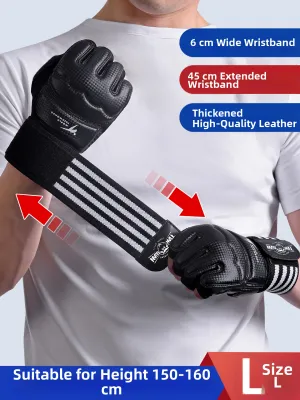
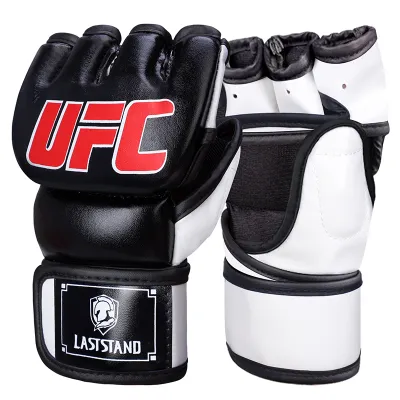
MMA gloves feature an open-finger, lightweight design, usually weighing between 4 to 6 ounces. They provide minimal padding over the knuckles and leave the fingers free, which is essential if your home routine includes grappling transitions, pull-ups, or resistance band work between punching rounds. While they offer excellent realism for mixed martial arts training, they provide very little wrist support and minimal impact absorption, making them unsuitable for heavy, prolonged power punching on a dense heavy bag.
Decision Matrix for Home Training
| Glove Type | Best Bag Match | Padding Density | Primary Benefit | Ideal User |
|---|---|---|---|---|
| Bag Gloves | Heavy Bags | High (Dense) | Maximum knuckle protection | Power hitters & heavy bag specialists |
| Training Gloves | Heavy & Double-End | Medium (Balanced) | Versatility & wrist support | General fitness & multi-sport athletes |
| MMA Gloves | Light Bags & Grappling | Low (Minimal) | Hand freedom & grip realism | MMA practitioners & cross-trainers |
Critical Fit and Wrist Support Checks
When training at home, you do not have a coach or training partner to help you secure your gear. This makes the glove’s closure system a critical usability factor. While professional fighters often prefer lace-up gloves for a custom fit, these are highly impractical for solo home training because they are nearly impossible to tie tightly by yourself. Hook-and-loop (Velcro) closure systems are the standard choice for home gyms, allowing you to easily secure, adjust, and remove your gloves using only your teeth or your opposite gloved hand.
To verify that a glove fits correctly, pay close attention to the internal hand compartment. Your fingers should reach the end of the glove comfortably without being cramped, and your thumb should feel naturally positioned and protected. There should be no excess internal space that allows your hand to slide or shift during impact, as this movement causes friction blisters and can lead to knuckle misalignment upon contact with the bag.
Always consult the manufacturer’s sizing chart, which typically pairs glove weight (in ounces) with your body weight and hand circumference. For heavy bag work, heavier gloves (such as 14oz or 16oz) provide thicker padding and better conditioning benefits, while lighter gloves (10oz or 12oz) are better suited for smaller hands or speed-focused workouts. Ensure that the glove size you select leaves enough internal room to accommodate hand wraps comfortably.
When to Replace or Upgrade Your Current Gloves
Boxing gloves do not last indefinitely, and using worn-out gear in a home gym significantly increases your risk of injury. You should regularly perform a physical inspection of your gloves. Press down on the knuckle area; if the foam feels soft, crumbly, or flat, or if you can feel your knuckles through the padding, the protective structure has collapsed, and the gloves must be replaced. Additionally, inspect the stitching along the seams and check the hook-and-loop straps to ensure they still hold securely under tension.
In tropical climates, sweat and high humidity accelerate the degradation of glove linings and materials. If your gloves develop a persistent, sour odor that does not go away after drying, or if the inner lining begins to tear and expose the foam, it is time for an upgrade. To prolong the lifespan of your gear, always dry your gloves in a well-ventilated, shaded area after every session, and consider using cedar-filled glove inserts to absorb moisture.
Finally, as your home training evolves, you may find that a single pair of gloves no longer meets your needs. If you are expanding your routine from basic heavy bag conditioning to include high-speed double-end bag drills, investing in a secondary, lighter pair of gloves will optimize your performance and protect your primary heavy bag gloves from unnecessary wear.
Frequently Asked Questions (FAQ)
Do I need hand wraps if my gloves have good padding?
Yes, you should always wear hand wraps regardless of how much padding your gloves have. While glove padding is designed to absorb the external impact of the blow, hand wraps serve a completely different structural purpose. Wraps compress and secure the many small bones, joints, and ligaments in your hand, keeping them aligned and preventing them from collapsing upon impact. They also provide essential lateral support to your wrist, reducing the risk of sprains during off-center punches. Budgeting a small amount for a quality pair of hand wraps is one of the most effective ways to prevent hand injuries during home training.
Can I use the same gloves for heavy bag work and sparring?
No, you should not use the same pair of gloves for both heavy bag training and sparring with a partner. Repetitive impact against a dense heavy bag rapidly compacts and hardens the foam padding inside the glove. If you use those same compacted gloves to spar, you risk injuring your training partner because the hardened foam can no longer safely disperse impact. For safety, keep a dedicated, softer pair of training or sparring gloves that never make contact with the heavy bag.

Community discussion
Share your experience or ask a question. Comments are reviewed before publication.