
Choosing your first pair of roller skates shoes is a pivotal decision that shapes how quickly you build confidence, balance, and control on wheels. The right choice depends on where you plan to skate, your physical goals, and whether the gear is for a growing child or an adult. Beginners typically choose between three primary configurations: quad skates, inline skates, and adjustable skates. Each style offers distinct advantages in stability, maneuverability, and suitability for different surfaces. By understanding how these designs interact with your body mechanics and local skating environments, you can select a pair that keeps you safe and motivated.
Assess Your Skating Goals and Environment
Before browsing online marketplaces or local sports shops, you must evaluate where and why you intend to skate. The physical surface you use plays a massive role in your skating experience. In the Philippines, beginners often start on barangay basketball courts, subdivision roads, or concrete park paths. These outdoor environments are prone to dust, small pebbles, and uneven expansion joints. Conversely, indoor skating rinks or polished commercial spaces offer smooth, predictable surfaces. If you plan to skate primarily outdoors, you need a setup that can handle vibrations and minor debris without stopping abruptly.
Your personal profile and fitness objectives also dictate the ideal skate type. An adult looking for a high-intensity cardiovascular workout or a practical way to commute short distances will have vastly different requirements than a young child learning basic coordination. Adults require robust frame construction and supportive boots to handle their body weight and protect their joints. Meanwhile, parents buying for children must balance the need for proper ankle support with the reality of rapid growth spurts.
Products mentioned in this guide
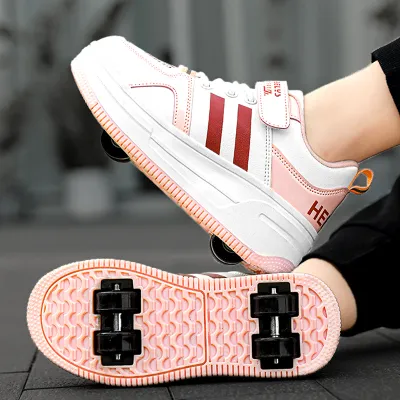
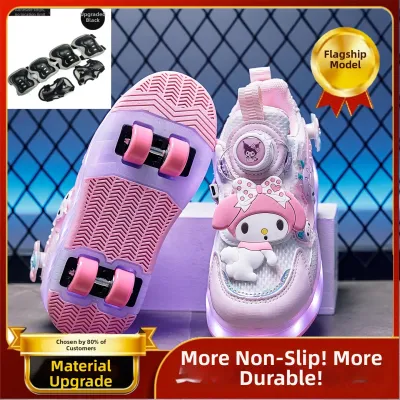
Prices are valid at publication and may change. Please refer to the product page for the latest price.
Finally, define your long-term skating goals. If you are drawn to the rhythmic flow of dance skating, artistic maneuvers, or the community aspect of roller derby, your path leads toward traditional setups. If your goal is to cruise long distances, build leg strength, or eventually transition to speed skating, a streamlined, linear configuration is more appropriate. Clarifying these goals early prevents the frustration of buying gear that limits your progress.
Understanding the Three Main Types of Roller Skates Shoes
To make an informed purchase, you must understand how the physical design of roller skates shoes influences your balance and movement. The primary differentiator is the wheel configuration, which fundamentally alters how your body weight is distributed. This structural layout affects your lateral (side-to-side) stability and your longitudinal (forward-backward) balance.

Additionally, boot construction varies significantly across different styles. Some skates feature high-top, stiff boots designed to lock the ankle in place, while others utilize low-cut, flexible designs that allow for deep knee bends and agile footwork. The weight of the skate, the frame material (such as composite plastic or aluminum), and the placement of the braking mechanism all contribute to the initial learning curve. Understanding these mechanical differences helps you anticipate how your body will adapt during your first few sessions.
Quad Skates: Stability and Classic Rink Skating
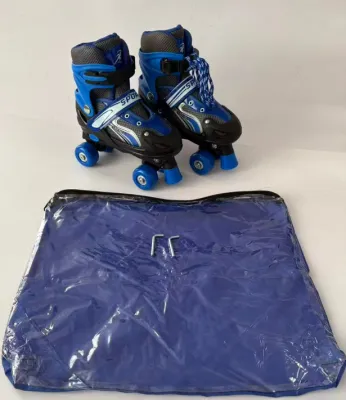
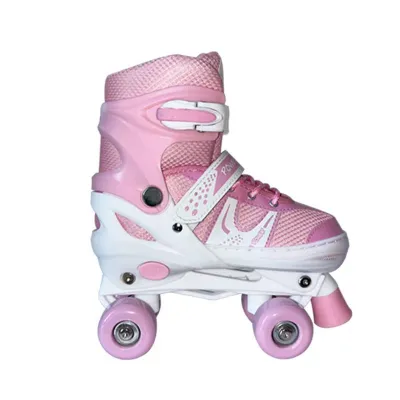
Quad skates, often referred to as traditional roller skates, feature four wheels arranged in a two-by-two rectangular configuration. This wide wheelbase provides excellent lateral stability when you are standing still or gliding slowly. For absolute beginners, this natural side-to-side balance offers an immediate sense of security, making it easier to stand upright without feeling like the skates will slip out from under you.
These skates are highly favored for indoor rinks, artistic dance skating, and roller derby due to their maneuverability in tight spaces. The shorter frame allows for quick turns and agile footwork. However, this compact wheelbase means quad skates have less longitudinal stability. Beginners may find themselves leaning too far forward or backward, which can lead to falls if they do not maintain a proper bent-knee posture.
Stopping on quad skates relies on a toe stop located at the front of the boot. To brake, you must drag the toe stop behind you or perform a turn to plant the stopper on the ground. While the toe stop is highly effective for controlled halts and quick starts, using it outdoors on rough concrete requires caution, as catching a toe stop on a crack can cause a forward trip.
Inline Skates: Speed, Fitness, and Outdoor Cruising
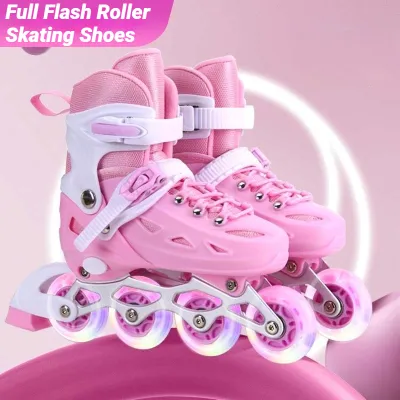
Inline skates, commonly known as rollerblades, feature three to five wheels arranged in a single straight line. This linear configuration provides exceptional longitudinal stability, making it much harder to fall forward or backward compared to quad skates. However, the narrow wheel footprint offers very little lateral support, requiring your ankles and lower legs to work harder to keep the skates upright. Beginners must focus on building ankle strength to prevent their feet from rolling inward.
For outdoor skating on public paths or roads, inline skates are highly efficient. The long, narrow frame and larger wheels bridge small cracks, twigs, and pebbles far better than the smaller wheels of quad skates. This makes them a practical choice for fitness enthusiasts, commuters, and those who want to cover long distances with minimal effort.
Most beginner inline skates come equipped with a heel brake on one of the boots. To stop, you slide the braking foot forward, lift your toes, and press the rubber pad into the ground while keeping your knees bent and your weight centered on the non-braking leg. This motion is highly intuitive for beginners and provides reliable stopping power on outdoor paths, provided the surface is dry and free of loose gravel.
Adjustable Skates: Growth and Budget-Friendly Options for Kids
Adjustable skates are specifically engineered to accommodate the rapidly growing feet of children. These skates feature a push-button or lever-activated mechanism that allows the toe cap of the boot to slide forward, expanding the skate across three to four shoe sizes. This design ensures that parents do not have to purchase a new pair of roller skates shoes every few months, making it a highly economical choice.
These skates are available in both quad and inline configurations, allowing parents to choose the style that best matches their child’s interests. The boots are typically made of thick, high-impact plastic shells that provide excellent ankle support for young, developing muscles. This rigid structure helps children maintain proper alignment while learning the basics of balance and gliding.
However, adjustable skates have distinct structural limitations. The expanding mechanism adds weight and bulk to the frame, which can make the skates feel heavy and cumbersome for older children or those attempting advanced tricks. Furthermore, these skates are designed with lower weight capacities and are not suitable for adult beginners, as the plastic adjustment joints cannot safely support adult forces during active skating.
Matching Your Profile to the Right Skate
To finalize your decision, you can map your personal profile, budget, and local environment to the most suitable skate type. If you are an adult beginner looking to skate outdoors for fitness on local roads or park paths, inline skates are your best option. They handle rough terrain efficiently and provide an excellent cardiovascular workout. If you plan to spend your weekends at an indoor roller disco or want to learn dance steps, a classic pair of quad skates will serve you best.
For parents buying for children under the age of twelve, adjustable skates are almost always the most practical starting point. Look for models that offer a secure, rigid cuff and reliable buckle closures rather than soft-boot designs, which can sag and fail to support weak ankles. If your budget allows, investing ₱3,000 to ₱6,000 in a reputable entry-level pair from a dedicated sports brand will yield better wheel urethane, smoother bearings, and more durable frame materials than ultra-cheap toy alternatives.
As you progress from a complete novice to an intermediate skater, your gear needs will evolve. Beginners should focus on mastering basic balance, turning, and stopping before worrying about high-performance upgrades. Once you can confidently navigate your local environment, you can transition to specialized fixed-size boots, high-rebound wheels, and precision bearings tailored to your specific discipline.
Essential Safety Gear and Fit Checks for Beginners
Roller skating is an active, high-risk sport that requires proper preparation, physical awareness, and protective equipment. Before taking your first stride, you must accept that falling is a natural part of the learning process. Equipment cannot replace proper training, physical judgment, and knowing your personal limits. Always start on flat, dry, and traffic-free surfaces, and stop skating immediately if you experience sharp pain, extreme fatigue, or if the weather turns wet, as moisture severely reduces wheel grip and compromises your brakes.
To ensure safety and comfort, you must verify that your roller skates shoes fit correctly. A proper fit means your toes gently touch the front of the toe box when standing upright, but slide back slightly when you bend your knees into a skating stance. Your heel must remain locked firmly at the back of the boot; if your heel lifts when you walk or glide, the skates are too large, which can lead to painful friction blisters and a dangerous loss of ankle control. Tighten all laces, straps, and buckles securely to provide rigid lateral support.
Never skate without a complete set of protective gear. A properly fitted helmet is non-negotiable to protect against head injuries. Wrist guards are equally critical, as instinctive falls often lead to landing on open palms; these guards absorb impact and prevent wrist fractures. Complete your safety kit with durable knee and elbow pads to protect your joints from abrasions and hard impacts. Before every session, perform a quick structural check: ensure all wheel axles are tight, the brake pad or toe stop is securely fastened, and the wheels spin freely without excessive side-to-side play. If you notice any loose parts or structural cracks, stop riding and consult a specialty sports store or a qualified technician.
Frequently Asked Questions (FAQ)
Can I use indoor roller skates shoes outdoors?
Yes, but you must check and likely swap your wheels to ensure safety and performance. Indoor skates typically feature hard wheels (rated 90A to 103A on the durometer scale) designed to slide smoothly on wood or polished concrete. If you take these hard wheels onto rough outdoor asphalt, you will experience extreme, uncomfortable vibrations, and a tiny pebble could cause you to trip. For outdoor skating, swap your wheels to a softer compound (78A to 85A), which absorbs shocks and grips uneven pavement. Additionally, outdoor skating exposes your bearings to dust and moisture; you must clean them regularly to prevent rust and spinning failures.
Is it harder to learn on inline skates compared to quad skates?
The difficulty depends largely on your personal background and natural balance. For absolute beginners with no wheeled sports experience, quad skates often feel easier initially because they stand upright on their own, providing immediate lateral stability. However, inline skates are often easier to maneuver outdoors and offer superior forward-backward balance. If you have prior experience with ice skating, ice hockey, or snow skiing, the linear motion and ankle engagement of inline skates will feel highly intuitive, allowing you to learn the basics much faster than you would on quads.

Community discussion
Share your experience or ask a question. Comments are reviewed before publication.