
Choosing the right ride-on toy for a growing child requires balancing fun, physical development, and safety. A scooter car for kids—often designed as a hybrid between a ride-on toy and a traditional kick scooter—offers an excellent way to build motor skills, balance, and coordination from an early age. However, a model that is perfect for a five-year-old can be frustrating or even hazardous for a toddler, while a toddler-focused ride-on will quickly be outgrown or damaged by an older child. Navigating the wide array of options on online marketplaces and in local department stores requires a clear understanding of how a child’s age, physical size, and developmental milestones align with specific scooter features. By matching the mechanical design of the scooter to your child’s current physical capabilities, you ensure a safer, more enjoyable riding experience that supports their natural growth.
What Defines a Scooter Car and Why Age Matching Matters
A scooter car for kids represents a distinct category of ride-on toys, differing significantly from standard two-wheel kick scooters. While a traditional kick scooter requires advanced balance and continuous standing, a scooter car often features a multi-functional design, incorporating a seat, a steering wheel, or a parent push bar. These hybrid models are engineered to transition alongside your child, starting as a seated ride-on toy that parents can push and eventually converting into a self-propelled standing scooter. This versatility makes them highly popular for families looking for long-term value, but it also means parents must be highly selective about the mechanical specifications of each configuration.
When evaluating these toys, weight limits, deck height, and the overall center of gravity are the most critical physical factors to consider. A lower deck height keeps the child’s center of gravity close to the ground, which dramatically reduces the risk of tipping and makes it easier for small legs to reach the pavement. As children grow, their center of gravity shifts upward, requiring a wider wheel track and a more robust frame to maintain stability during turns. If a child exceeds the recommended weight limit of a lightweight plastic model, the deck can flex excessively, dragging against the ground or causing the steering column to buckle under pressure.
Products mentioned in this guide
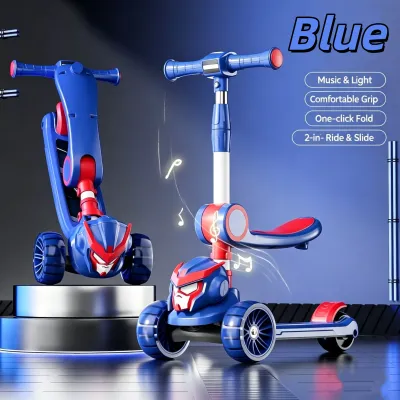
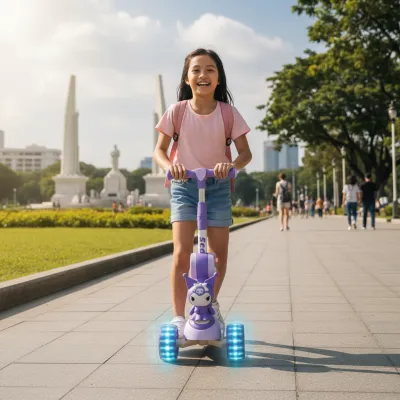

Prices are valid at publication and may change. Please refer to the product page for the latest price.
It is vital to remember that manufacturer age labels on packaging are only baseline recommendations rather than absolute safety guarantees. Children develop motor skills, balance, and physical strength at highly individual rates, meaning a tall three-year-old may have different equipment needs than a petite peer of the exact same age. Before purchasing, parents should assess their child’s coordination, leg strength, and ability to follow basic safety instructions. Relying solely on the age range printed on the box can lead to a mismatch where the scooter is either too heavy for the child to steer safely or too small to support their weight comfortably.
Furthermore, physical development is not linear, and children often experience sudden growth spurts that can make a previously perfect scooter car uncomfortable or unsafe within a matter of months. A scooter that forces a child to bend too far forward or stretch too far to reach the handlebars can lead to poor posture and reduced control. By understanding the mechanical differences between various models and focusing on adjustable features, parents can select a vehicle that adapts to these rapid physical changes, ensuring a longer lifespan for the toy and a much safer experience for the young rider.
Toddlers (Ages 1–3): Selecting for Stability and Parental Control
For the youngest riders, the primary design priorities are absolute stability, fall prevention, and active parental supervision. Toddlers who are just learning to walk or have recently mastered steady steps do not yet possess the core strength or rapid reflexes needed to balance on a narrow, two-wheeled platform. Consequently, scooter cars designed for this age group must feature a three-wheel or four-wheel configuration with a wide front wheelbase. This wide footprint provides a self-standing foundation that resists tipping, even when the toddler leans heavily to one side or attempts to climb onto the seat without assistance.

An indispensable feature for this developmental stage is an adjustable, sturdy parent push handle coupled with a secure, removable seat. During the early months of use, the scooter car essentially functions as a stroller alternative, allowing parents to steer and propel the vehicle while the toddler sits comfortably and practices placing their feet on the designated footrests. As the child’s leg strength improves, the parent handle can be removed, allowing the toddler to push themselves forward using their feet in a classic foot-to-floor motion. This gradual transition builds confidence and leg muscles without exposing the child to the risk of runaway speed.
When inspecting the physical build of a toddler model, look for a very low deck-to-ground clearance and wheels designed for slow, controlled rolling. High-speed bearings are a hazard for toddlers, as the vehicle can easily roll away faster than the child can react or the parent can run. The wheels should be made of soft, shock-absorbing materials like polyurethane, which grip smooth indoor tiles or flat outdoor concrete driveways without slipping. Because these early models are intended for flat, paved surfaces free of debris, they should not be used on steep slopes, rough gravel, or uneven grassy areas where small wheels can easily get stuck, causing the rider to pitch forward.
Additionally, the materials used in toddler scooter cars must be highly durable and non-toxic, as young children frequently touch all parts of the toy and may even try to bite the handlebars. Look for high-grade, BPA-free plastics and soft rubber grips that do not degrade or become sticky when exposed to warm, humid tropical weather. The seat should be ergonomically shaped to support the toddler’s pelvis properly, preventing them from sliding forward or backward during movement. A well-designed toddler model prioritizes these subtle comfort and safety details, ensuring that the child’s first experience with wheeled toys is entirely positive and free from unnecessary tumbles.
Preschoolers (Ages 3–5): Choosing Features for Balance and Steering
As children enter the preschool years, their coordination, spatial awareness, and leg strength increase rapidly, allowing them to transition to more active steering mechanisms. At this stage, the choice between a lean-to-steer system and a direct steering wheel or handlebar becomes a key decision point. Lean-to-steer mechanisms require the child to shift their body weight physically to the left or right to curve the wheels, which naturally teaches the fundamentals of balance used later in riding bicycles. Direct steering, on the other hand, responds immediately to handlebar rotation, which can sometimes be too abrupt for a child who has not yet mastered fine motor control.
To accommodate this rapid growth, look for a scooter car with a seat that can be easily removed without complex tools. During this preschool phase, children often alternate between wanting to sit and ride and wanting to stand and kick like older kids. A tool-free removable seat allows parents to make quick adjustments during a trip to the local park or subdivision playground. When the seat is removed, the deck should reveal a wide, non-slip surface that provides ample traction for small shoes, ensuring the child does not slip off when pushing off the ground.
Adjustable handlebar heights are equally critical during this stage of rapid physical development. A handlebar that is too low forces the child to hunch forward, putting unnecessary strain on their lower back and reducing their field of vision. Conversely, a handlebar that is too high can cause their elbows to lock, making steering difficult and increasing the risk of facial injury if they stop suddenly. The ideal handlebar height should allow the child to stand comfortably with a slight bend in their elbows, keeping their hands at roughly chest height for optimal control and posture.
Furthermore, preschool-aged children are beginning to explore outdoor environments with more enthusiasm, meaning their scooter cars will face more varied terrain. Look for models equipped with slightly larger front wheels that can easily roll over small cracks in the pavement, twigs, or transitions between concrete slabs. The steering column should have a smooth, responsive feel without excessive play or wobbling, which can cause the child to lose control. Investing in a model with high-quality, sealed bearings will ensure that the steering remains smooth and predictable, even after multiple trips to dusty outdoor play areas.
School-Age Kids (Ages 6+): Evaluating Durability, Speed, and Braking
By the time a child reaches school age, their play becomes much more dynamic, requiring a scooter car that can handle higher speeds, sharper turns, and rougher terrain. At this level, the simple foot-to-floor stopping method is no longer sufficient or safe. Parents must carefully evaluate the braking systems integrated into the scooter, with rear foot brakes being the most common and reliable option for this age bracket. The child must have the leg strength and coordination to shift their weight to one foot while pressing down firmly on the rear fender brake to slow down smoothly. If a model features a hand brake, verify that the lever is sized appropriately for smaller hands and that the grip strength required to engage it is within your child’s capability.
The structural integrity of the frame becomes paramount as school-age children put more stress on the vehicle through daily, active use. While toddler models rely heavily on lightweight plastics, scooters for older kids should feature reinforced fiberglass decks, aluminum alloy steering columns, and heavy-duty steel components. These materials provide the necessary weight capacity—often up to 50 kilograms or more—and prevent the deck from sagging or cracking over time. A robust frame also dampens vibrations when riding over expansion joints in concrete pavements or slightly uneven asphalt, providing a smoother and safer ride.
Portability and storage also become major considerations as families transport scooters to school, parks, or weekend outings. Foldable designs are highly convenient, but they require close inspection of the folding joints and locking mechanisms. The folding mechanism must lock securely into place with a reassuring click, ensuring it cannot accidentally collapse while the child is riding. Look for designs that feature pinch-free sleeves or levers that keep small fingers safe from moving parts, and ensure that the folding action is simple enough for an adult to operate quickly but secure enough that a child cannot easily unlock it during play.
Additionally, older children often seek out scooters that reflect their personal style, making aesthetic features like light-up wheels or vibrant color schemes highly appealing. While these features add an element of fun, they should never overshadow the mechanical quality of the scooter. Ensure that any integrated LED lights in the wheels are powered by kinetic energy rather than batteries, which can corrode in humid tropical climates. By prioritizing structural durability and reliable braking systems over cosmetic additions, you ensure that the scooter remains a safe and dependable companion for your child’s daily outdoor adventures.
Pre-Purchase Checklist: Sizing, Safety Limits, and Stopping Conditions
Before finalizing your purchase on any online marketplace or at a local retail store, it is essential to run through a practical checklist to ensure the scooter car is a perfect fit for your child and your home environment. Do not rely solely on the age guidelines provided by the manufacturer; instead, take physical measurements of your child. Measure their inseam while they are wearing their typical play shoes and compare this measurement to the minimum and maximum seat heights of the scooter. Similarly, measure the height from the floor to their chest to ensure the adjustable handlebars can accommodate their current height with room for future growth.
Next, carefully inspect the product labels for weight limits and safety certifications. While budget-friendly options on online marketplaces can be tempting, investing a few thousand pesos (₱) in a certified, durable model is a safer long-term choice. In tropical climates where outdoor play is common, ensure that the materials are UV-resistant and that metal parts are treated to resist rust from high humidity. Additionally, never purchase a scooter car without also acquiring the necessary safety gear. A properly fitted helmet is non-negotiable, regardless of how slow the scooter car is designed to go. Knee pads, elbow pads, and closed-toe shoes are also essential to protect against scrapes and bruises on hard concrete surfaces, which are common in local neighborhoods and parks.
Finally, establish clear stopping conditions and maintenance rules to determine when the scooter car is no longer safe to ride. Over time, exposure to dust, moisture, and rough pavement will wear down the mechanical components. Inspect the vehicle regularly for visible hairline cracks in the plastic deck, loose or wobbling steering columns, and worn-out wheel bearings that do not spin smoothly. If you notice any structural compromise, excessive play in the handlebars, or a brake that fails to stop the wheels effectively, immediately suspend use of the scooter until the worn parts are replaced or the vehicle is retired.
It is also wise to check the availability of replacement parts before making a final decision. High-quality brands often offer replacement wheels, brake pads, and handlebar grips, allowing you to extend the life of the scooter car without having to buy an entirely new unit. If a manufacturer does not offer replacement parts or clear customer support channels, any minor damage to a wheel or brake could render the entire toy useless. Taking the time to verify these details before purchasing will save you money and ensure your child has a reliable, safe ride for years to come.
Frequently Asked Questions (FAQ)
At what age can a child safely use a scooter car without a seat?
Most children can transition to using a scooter car without a seat between the ages of two and a half and three years old, though this depends heavily on individual physical development. Before removing the seat, ensure your child can stand steadily on one foot, maintain their balance while kicking with the other, and follow basic steering and stopping instructions. Always consult the specific product manual to verify the minimum age and weight limits recommended for the standing configuration, as some hybrid models have different structural limits when the seat is removed.
How do I maintain the wheels and steering mechanism of a kids' scooter car?
To keep a kids’ scooter car operating safely, perform regular visual inspections to clear out hair, dirt, and small pebbles that can get trapped in the wheel axles and steering joints. In humid or tropical environments, wipe down the entire frame and deck with a damp cloth after outdoor use to remove sweat, mud, and road salt, then dry it thoroughly before storage. Store the scooter car indoors or in a dry, sheltered area to protect the metal bearings and steering springs from moisture, which can cause rust, stiff steering, and premature mechanical failure.

Community discussion
Share your experience or ask a question. Comments are reviewed before publication.