
When preparing for a climb, every piece of gear attached to your harness must serve a precise, reliable purpose. In vertical environments, the line between safety and catastrophe is incredibly thin. A common point of confusion for beginners and casual outdoor enthusiasts is the humble carabiner keychain. It looks like a climbing carabiner, snaps like one, and is often sold in outdoor-themed shops. However, using a decorative or everyday carabiner keychain to attach climbing gear, bear body weight, or secure any life-support system is an extremely dangerous mistake that can lead to catastrophic equipment failure, severe injury, or death.
No amount of climbing experience, physical strength, or careful movement can compensate for structural gear failure. If you are heading out to the crags in the Philippines, understanding why these everyday accessories must never cross over into your climbing setup is a fundamental safety requirement. Equipment cannot replace proper training, safety checks, and sound judgment. Before you pack your gear bag, you must understand the critical differences that separate a simple pocket accessory from a life-saving piece of climbing hardware.
Critical Differences Between Keychain and Climbing Carabiners
To understand why a carabiner keychain is entirely unsuitable for vertical use, you must look at how these two categories of products are designed, manufactured, and tested. While they share a similar basic shape, they are engineered for completely different worlds.
Products mentioned in this guide
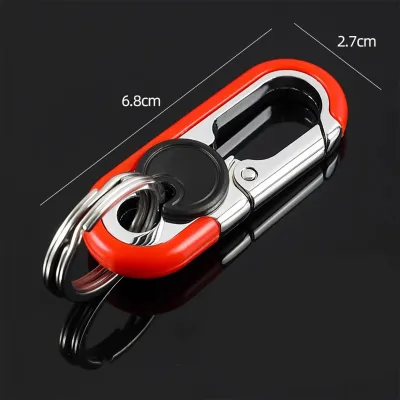
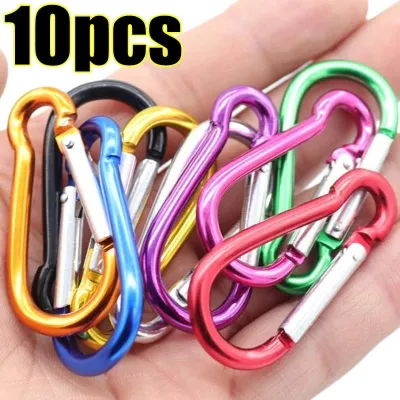
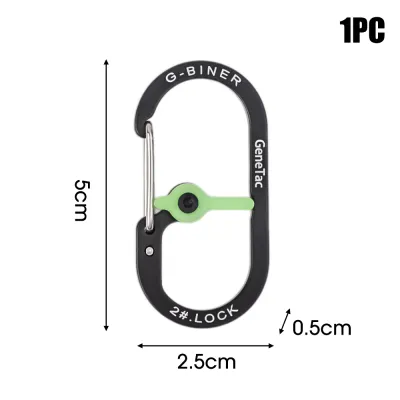
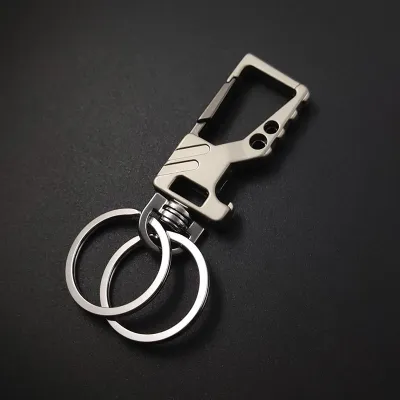
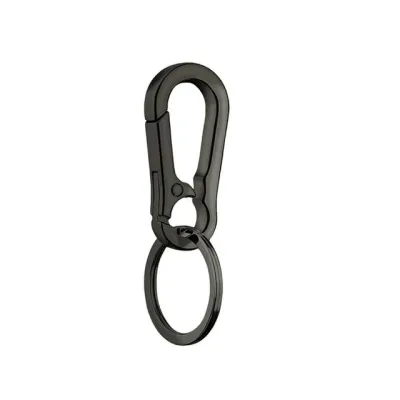
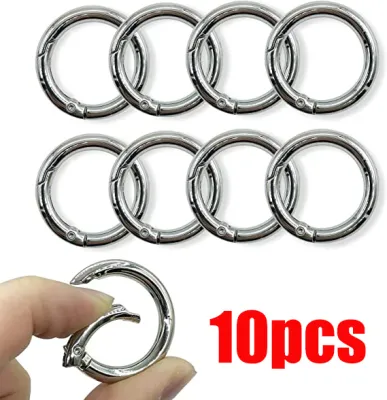
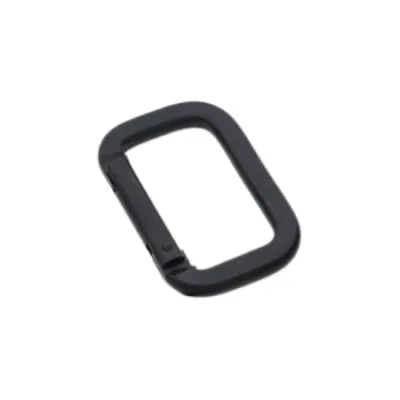
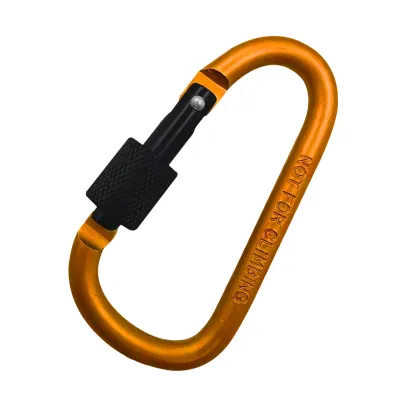
Prices are valid at publication and may change. Please refer to the product page for the latest price.
Material and Manufacturing Standards
The differences between these two items begin at the molecular level. Certified climbing carabiners are manufactured using high-grade, hot-forged aluminum alloys, such as 7075-T6, which are also used in aerospace engineering. The hot-forging process aligns the internal grain structure of the metal along the curves of the carabiner, maximizing its structural integrity and resistance to stress. This ensures the metal can absorb sudden, violent forces without fracturing.
In contrast, promotional or decorative carabiner keychains are typically made from cheap cast aluminum, zinc alloys, or even molded plastics. Casting involves pouring molten metal into a mold, a process that inherently leaves microscopic air pockets, impurities, and weak points within the finished product. While a cast alloy keychain is perfectly adequate for holding a set of house keys, it lacks the ductility of forged metal. Under a sudden impact or dynamic shock load, cast metal does not bend; it shatters.
In the tropical, high-humidity climate of the Philippines, where salty coastal air and frequent rain can accelerate corrosion, low-grade cast alloys degrade rapidly. Microscopic cracks can form unseen, leading to sudden, catastrophic failure under minimal tension. Forged climbing gear is treated with protective anodized coatings to resist these harsh environmental conditions, whereas cheap keychains quickly oxidize and weaken.
Load Ratings and Strength Testing
Climbing carabiners are engineered and rigorously tested to withstand the immense forces generated during a fall. In climbing, strength is measured in kilonewtons (kN), where 1 kN represents approximately 100 kilograms (220 pounds) of static force. When a climber falls, the force generated is dynamic, meaning it multiplies rapidly based on the fall distance and the elasticity of the rope.
A standard climbing carabiner is rated to withstand at least 20 kN (about 2,000 kilograms of force) along its major axis when the gate is closed. This high threshold is necessary because a human body falling just a few feet can easily generate 5 to 8 kN of dynamic force. Climbing gear must also undergo rigorous batch testing to ensure every single unit meets these exact safety parameters before leaving the factory.
In stark contrast, keychain carabiners undergo no standardized load testing or quality control. They are designed solely for static, lightweight items. A typical keychain carabiner may deform or snap under a force of less than 0.5 kN (roughly 50 kilograms), which is easily exceeded by a simple slip or even a heavy backpack swinging during a steep descent. Using a non-rated keychain to secure any gear that you rely on for safety is an invitation for immediate structural failure.
Gate Mechanisms and Locking Features
The gate of a carabiner is its weakest link, and climbing-rated models are engineered with highly sophisticated locking mechanisms to prevent accidental opening. Climbing carabiners utilize heavy-duty, fatigue-tested internal springs and secure locking sleeves, such as manual screwgates or automatic twistlocks. These systems ensure that once the gate is closed, it remains closed, even when rubbing against rough limestone or volcanic rock.
Keychain carabiners, on the other hand, feature flimsy wire or sheet-metal gates with weak, unrated springs. These gates are easily snagged by clothing, tree branches, or other gear loops, causing them to pop open under the slightest pressure. A carabiner with an open gate loses up to two-thirds of its rated strength, making it highly susceptible to snapping under minor loads.
Furthermore, cheap keychains often have a hook-nosed design at the gate interface. This hook can easily catch on bolts, hangers, or sling webbing, creating a highly dangerous leverage point that can snap the gate or cause the carabiner to unclip itself entirely. Climbing carabiners often feature smooth “keylock” noses specifically designed to prevent this dangerous snagging behavior.
How to Identify a Climbing-Rated Carabiner
Before heading to any climbing site, you must perform a physical inspection of your gear. If you cannot verify the safety ratings of a carabiner, you must immediately remove it from your active gear set. Use this checklist to verify if a carabiner is genuinely safe for vertical environments.

Checking for Safety Certifications
The most reliable way to verify if a carabiner is safe for climbing is to check for official safety certifications stamped directly into the metal spine. Legally certified climbing gear must comply with strict international standards, such as those set by the UIAA (International Climbing and Mountaineering Federation) and the European Committee for Standardization (CE).
Look for the letters “UIAA” or a “CE” mark followed by a four-digit identification number (such as CE 0123 or CE 0082) stamped on the spine. These markings prove that the carabiner has passed rigorous independent laboratory testing for tensile strength, gate durability, and corrosion resistance under the EN 12275 standard. If a carabiner does not bear these stamped certifications, it must never be used in any vertical or load-bearing scenario.
Reading the kN (Kilonewton) Stamp
In addition to safety certifications, certified climbing carabiners feature permanent, manufacturer-stamped numerical values indicating their minimum breaking strength in three distinct configurations. These configurations represent different loading scenarios that can occur during a climb:
- Major Axis (↔): The strength of the carabiner when loaded end-to-end along its spine with the gate closed. This rating must be at least 20 kN for standard climbing use.
- Minor Axis (↕): The strength of the carabiner when cross-loaded across its width. Because carabiners are not designed to be loaded this way, this rating is much lower, typically around 7 to 10 kN.
- Gate Open (↻): The strength of the carabiner if the gate accidentally swings open during a load event. This is also significantly lower, usually between 7 and 9 kN.
Inspect your gear physically and reject any carabiner that relies on printed stickers, paper tags, or laser-etched markings that have worn away. If the numerical kN values are missing, illegible, or non-existent, treat the gear as unsafe and keep it out of your climbing system.
Spotting "Not For Climbing" Warnings
Manufacturers of decorative and utility keychains are well aware of the risks of misuse, which is why non-rated gear almost always features explicit exclusion warnings. Inspect the spine, gate, and packaging of any suspect carabiner. Look for molded, stamped, or etched phrases such as:
- "Not For Climbing"
- "Decorative Use Only"
- "Not For PPE" (Personal Protective Equipment)
- A graphic showing a crossed-out climber icon
These warnings are clear legal and physical disclaimers. If you spot any of these indicators, the carabiner must be kept far away from your harness, rigging ropes, or safety anchors. Do not assume that a warning is merely a formality; it is a direct statement about the physical limits of the material.
Safe Uses for Carabiner Keychains in Outdoor Settings
While keychain carabiners have no place in a climbing safety chain, they remain highly useful tools for low-risk organization during outdoor adventures. Understanding where they are useful—and where they cross the line into danger—is key to smart gear management.
In a campsite or during an approach hike, a lightweight keychain carabiner can be used to organize house keys, clip a whistle to a backpack strap, or secure a lightweight camp cup or stuff sack. You can also use them to hang a lightweight battery-powered lantern inside your tent or keep your slippers (tsinelas) clipped to the outside of your pack after a long day of climbing.
The golden rule of gear management is simple: if the item dropping would cause injury to someone below, damage critical equipment, or halt your climb, do not use a keychain carabiner to secure it. In the Philippines, where climbing trails can be muddy, steep, and surrounded by dense jungle, dropping a critical item like a headlamp, a GPS device, or a water bottle down a deep ravine can quickly turn a minor issue into a survival emergency. For any item of moderate weight or high importance, upgrade to a non-locking, rated accessory carabiner instead.
What to Do If You Have Been Using the Wrong Gear
If you realize that you have been using a non-rated keychain carabiner in your climbing setup—even if only to hang a chalk bag or a water bottle—you must take immediate action to rectify the situation.
First, retire the keychain carabiner from all outdoor activities immediately. To prevent yourself or anyone else from accidentally using it for climbing in the future, physically destroy it or mark it permanently with bright tape and store it strictly in your household key drawer. Never leave unrated gear mixed in with your active climbing equipment.
Next, conduct a thorough inspection of your harness gear loops, slings, and any anchor webbing that came into contact with the improper gear. Cheap keychains often have sharp, stamped metal edges or burrs that can easily abrade nylon and polyester webbing, compromising their strength. If you find any signs of fraying, fuzziness, or cuts on your soft gear, replace those items immediately.
Finally, replace the retired items with certified climbing equipment. High-quality, rated climbing carabiners typically cost between ₱400 to ₱1,500 depending on the locking mechanism, which is a small price to pay for absolute peace of mind. Always purchase your gear from authorized outdoor gear retailers or reputable local climbing shops in the Philippines to ensure you are getting genuine, life-support-rated gear.
Frequently Asked Questions (FAQ)
Can I use a keychain carabiner to attach my chalk bag or water bottle to my harness?
While a chalk bag or a water bottle is relatively light, using a cheap keychain carabiner to attach them to your harness is still highly discouraged. During a climb, your body moves dynamically, and gear is subjected to bumps, scrapes, and sudden shifts. A weak keychain gate can easily catch on a rock feature and pop open, dropping your gear.
If a heavy water bottle falls from a multi-pitch route at a popular Philippine crag like Cantabaco or Wawa Gorge, it becomes a high-velocity projectile that can cause severe head injuries to belayers or other climbers below. Furthermore, losing your chalk bag mid-route can severely compromise your grip on humid, sweaty days, potentially ruining your climb. It is far safer to use an inexpensive, rated accessory carabiner or a retired climbing carabiner for these tasks.
Are expensive or branded keychain carabiners safe for climbing?
No, price and brand name do not dictate safety; official certification does. Many premium lifestyle and outdoor brands sell expensive, rugged-looking metal carabiners intended for everyday carry (EDC) or aesthetic styling. These items can cost significantly more than a basic climbing carabiner, yet they are still manufactured using cast alloys and lack any UIAA or CE safety ratings.
Never assume a carabiner is safe for climbing simply because it feels heavy, looks robust, or carries a well-known outdoor brand logo. If the physical spine does not feature stamped kN ratings and certified safety marks (UIAA or CE), it is not a life-support tool and must never be used for climbing.
What should I look for when buying carabiners for climbing in the Philippines?
When purchasing climbing gear in the Philippines, always buy from authorized outdoor gear retailers, official brand stores, or established local climbing gyms and specialty shops. Counterfeit climbing gear is a persistent issue on unregulated online marketplaces and ecommerce platforms, and these fakes often mimic the look of reputable brands without meeting safety standards.
Before purchasing, physically inspect the carabiner for genuine, stamped UIAA or CE certifications and clear kN ratings on the spine. Additionally, consider the local tropical environment. High humidity and salty coastal air can accelerate corrosion on metal gear. Opt for high-quality, anodized aluminum carabiners, which offer superior resistance to oxidation. Regularly inspect your gear for any signs of pitting, rust, or sticky gate action, and clean them with fresh water and dry them thoroughly after climbing near coastal areas.

Community discussion
Share your experience or ask a question. Comments are reviewed before publication.