
Deciding between the Xiaomi Walking Pad R1 Pro and a traditional full-size treadmill comes down to a trade-off between space-saving convenience and high-intensity performance. If your primary goal is to accumulate daily steps while working at a standing desk or watching television in a compact condominium, a folding walking pad offers an adaptable, low-profile solution that tucks away after use. Conversely, if your fitness routine demands high-speed running, steep incline training, or long-distance endurance workouts, a dedicated full-size treadmill provides the structural stability, wider belt, and motor power necessary to support those intense physical demands. Evaluating your physical environment, checking your body weight against manufacturer limits, and defining your specific training goals will prevent you from purchasing equipment that either crowds your living room or fails to keep pace with your workouts.
Space and Form Factor: Fitting the Equipment Into Your Home
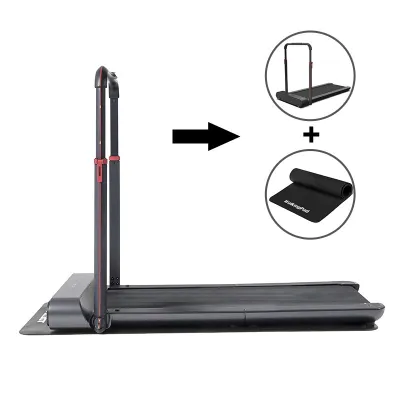
Living spaces in urban areas of the Philippines, such as high-rise condominiums or townhouses, require careful spatial planning before introducing any fitness equipment. The Xiaomi Walking Pad R1 Pro is specifically designed with a dual-folding mechanism, allowing the frame to fold 180 degrees so you can store it upright against a wall or flat under a sofa. This ultra-compact form factor minimizes visual clutter and frees up floor space for other daily activities when your workout is complete. In contrast, a traditional full-size treadmill occupies a permanent, substantial footprint that can dominate a room, even if the deck folds upward at an angle.
Before purchasing either machine, you must measure your intended workout area with a physical tape measure rather than relying on visual estimation. For safety, always verify that you have at least 0.5 meters of clear space on both sides of the belt and at least 1 to 2 meters of unobstructed clearance directly behind the machine in case of an accidental slip or fall. Additionally, calculate your ceiling clearance by adding your height to the deck height of the machine, especially if you plan to use a full-size treadmill with an incline feature that raises your body closer to the ceiling.
Products mentioned in this guide
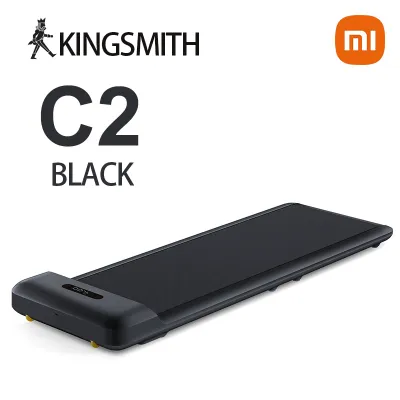
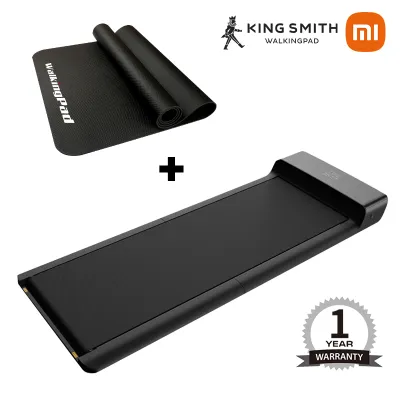
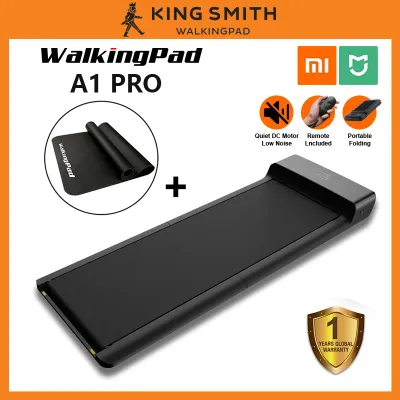
Prices are valid at publication and may change. Please refer to the product page for the latest price.
Portability is another critical differentiator that affects how often you will actually use the machine. The walking pad is relatively lightweight and typically features built-in transport wheels, making it manageable for a single adult to roll from a closet to a desk. A full-size treadmill, however, often weighs upwards of 60 to 100 kilograms, making it a semi-permanent fixture that requires multiple people to move safely. If your workout routine relies on quickly setting up and clearing away your gear, a heavy treadmill can quickly become an inconvenient obstacle in a shared living space.
Fitness Goals: Aligning Equipment With Your Workout Intensity
Your fitness equipment must match the physical demands of your training program to prevent premature wear on the machine and avoid personal injury. The Xiaomi Walking Pad R1 Pro is engineered primarily for low-impact walking, light jogging, and active multitasking. It serves as an excellent tool for breaking up sedentary work hours, maintaining joint mobility, and achieving daily step goals while working at a standing desk. Because its structural frame and motor are optimized for lower speeds, it is best suited for steady-state, low-to-moderate intensity cardio sessions.

If your training regimen includes high-speed running, sprint intervals, or hill climbs, a full-size treadmill is an absolute necessity. Traditional treadmills feature robust steel frames, advanced shock-absorption systems, and powerful motors that can sustain high speeds without overheating or shaking. They also offer adjustable incline settings, which are crucial for targeting different muscle groups, increasing cardiovascular challenge, and simulating outdoor terrain. Trying to perform high-intensity running on a compact walking pad can strain the motor and compromise your balance due to the shorter deck.
To ensure long-term safety and equipment durability, always cross-reference your physical profile with the manufacturer’s official specifications. Check the maximum weight capacity on the product label; compact walking pads generally have lower weight thresholds than heavy-duty full-size treadmills. Operating any fitness machine near or above its stated weight limit increases the risk of belt slippage, motor strain, and structural failure. Additionally, verify the maximum speed limit to confirm the machine can safely accommodate your fastest training pace.
Key Specifications to Verify on the Product Label
Understanding technical specifications prevents purchasing a machine that feels underpowered or physically restrictive. When reviewing product labels, pay close attention to the motor’s horsepower rating, distinguishing between Continuous Duty Horsepower (CHP) and Peak Horsepower (PHP). CHP represents the motor’s ability to maintain a consistent speed under a continuous load, which is critical for smooth belt movement and motor longevity. Peak horsepower only indicates the maximum power the motor can output for brief bursts, which does not reflect real-world workout performance.
Belt dimensions directly dictate your stride comfort and overall safety during a workout. A belt that is too narrow or too short can cause you to step off the side or rear of the deck, leading to falls. Taller users or those with longer running strides require a longer belt to move naturally without shortening their steps. Walking pads typically feature narrower and shorter belts to maintain their compact size, which is perfectly adequate for walking but may feel restrictive if you attempt to run. Full-size treadmills offer wider, longer decks that allow for natural lateral movement and full stride extension.
Console features and connectivity options also vary significantly between these two form factors. Walking pads often utilize minimalist LED displays on the floor board or simple remote controls, relying heavily on mobile applications for detailed tracking and setting adjustments. Full-size treadmills generally feature integrated consoles with physical buttons, built-in workout programs, heart rate monitors, and tablet holders. Use the following comparison table template to evaluate the specific models you are considering before making your final decision:
| Specification Category | Xiaomi Walking Pad R1 Pro (Verify via Manual) | Full-Size Treadmill (Verify via Manual) |
|---|---|---|
| Motor Type & Power | Check continuous horsepower (CHP) | Check continuous horsepower (CHP) |
| Speed Range | Verify minimum and maximum speed limits | Verify minimum and maximum speed limits |
| Incline Range | Typically flat (verify if any manual lift) | Verify motorized or manual incline levels |
| Belt Dimensions | Measure usable walking area (width x length) | Measure usable running area (width x length) |
| Max Weight Limit | Check maximum user weight capacity | Check maximum user weight capacity |
| Storage Footprint | Check folded dimensions and upright storage | Check folded dimensions and floor space |
Budget, Maintenance, and Long-Term Value
The initial purchase price is only one part of the total cost of ownership for home fitness equipment. In the Philippines, compact walking pads like the Xiaomi Walking Pad R1 Pro generally occupy a more accessible price tier, often ranging from ₱15,000 to ₱25,000 on local online marketplaces. Traditional full-size treadmills represent a much broader financial investment, with entry-level models starting around ₱20,000 and high-end, commercial-grade machines exceeding ₱80,000. While the lower price of a walking pad is appealing, you must weigh this against its long-term utility for your fitness journey.
Maintenance is particularly important in tropical climates like the Philippines, where high humidity and ambient salt air in coastal regions can accelerate rust and electrical wear. Regular belt lubrication, dust removal, and tension adjustments are required for both types of machines to prevent motor strain. Before buying, verify the warranty terms and the availability of local service centers or replacement parts. A cheaper machine with no local repair support can quickly become an expensive, unfixable piece of waste if a sensor or motor controller fails.
Consider the potential hidden cost of upgrading your equipment in the future. If you purchase a walking pad but find your fitness level quickly improves to the point where you want to start training for a local 10K run, you will need to purchase a full-size treadmill anyway, rendering the initial investment redundant. Conversely, buying a massive, expensive treadmill that you eventually find too cumbersome to maintain or use can lead to buyer’s remorse. Assess your long-term commitment to your fitness routine to choose the machine that offers the best value over several years.
How to Decide: The Final Selection Framework
To finalize your decision, evaluate your daily habits, physical space, and household environment against a structured selection framework. This systematic approach ensures that your chosen machine aligns with both your immediate lifestyle and your long-term physical goals.
Choose the Walking Pad if:
- Your primary goal is to increase daily step counts, perform light cardio, or walk while working at a standing desk.
- You live in a compact apartment, condominium, or shared space where permanent floor space is highly limited.
- You need a lightweight machine that can be folded, rolled, and stored away out of sight by a single person.
Choose the Full-Size Treadmill if:
- Your fitness routine requires high-speed running, interval training, or steep incline workouts.
- You have a dedicated home gym, garage, or large room where the machine can remain permanently set up.
- Multiple household members of varying weights and fitness levels will use the machine daily for intense workouts.
Verify first if:
- Your floor structure can safely support the weight of a heavy treadmill and the impact force of a running user.
- Your home's electrical outlets and circuit breakers can handle the power draw of a high-horsepower motor without tripping.
- The operational noise and vibration of the machine will disturb downstairs neighbors or other members of your household.
Frequently Asked Questions (FAQ)
Can I run on the Xiaomi Walking Pad R1 Pro?
The Xiaomi Walking Pad R1 Pro is designed primarily for walking and light jogging, with a maximum speed limit that is significantly lower than that of a standard running treadmill. Before attempting to run, you must check the official maximum speed rating in the user manual to see if it matches your running pace. Running on a device with a shorter, narrower belt and a lighter frame poses safety risks, as you may easily step off the edge or strain the motor beyond its intended capacity. For dedicated running workouts, a full-size treadmill is highly recommended to ensure stability and safety.
Do walking pads require less assembly than full-size treadmills?
Yes, walking pads generally require far less assembly and are designed for quick, out-of-the-box setup. Most models arrive almost fully assembled, requiring you only to unfold the frame, adjust the belt tension if necessary, and plug the unit into a grounded electrical outlet. Full-size treadmills, on the other hand, are shipped in large, heavy boxes and require significant assembly of the console, upright arms, and motor housing. Because of their weight and complexity, traditional treadmills often require two people for assembly or professional installation services to ensure safe operation.

Community discussion
Share your experience or ask a question. Comments are reviewed before publication.