
Finding the right yoga ball size is essential for ensuring your workouts are safe and effective. Whether you intend to use it for core training, active sitting, or physical therapy, the diameter of the ball must align with your physical proportions. Using a ball that is too small or too large can compromise your form, strain your lower back, and increase your risk of slipping during exercises.
To determine what size yoga ball you need, your total height serves as the primary starting point. Standard fitness balls are measured by their maximum diameter when fully inflated, ranging from 45 cm to 85 cm. Generally, individuals under 5’0″ require a 45 cm ball, while those between 5’1″ and 5’7″ should opt for a 55 cm ball. Taller individuals will need to step up to a 65 cm or 75 cm ball to maintain proper joint alignment.
However, height is only the first part of the equation. Your leg length, body weight, and intended activities also play critical roles. In addition, factors such as material elasticity and high humidity—common in tropical climates like the Philippines—can affect how the ball behaves under pressure. By understanding how to measure, test, and adjust your ball, you can maximize your comfort and get the most out of your fitness routine.
Products mentioned in this guide
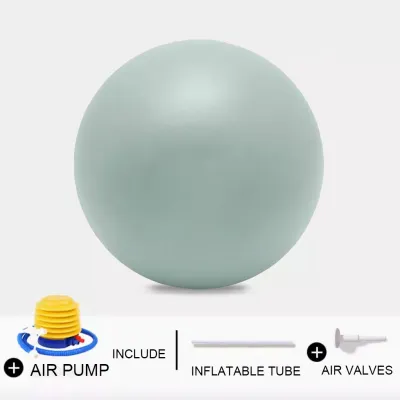
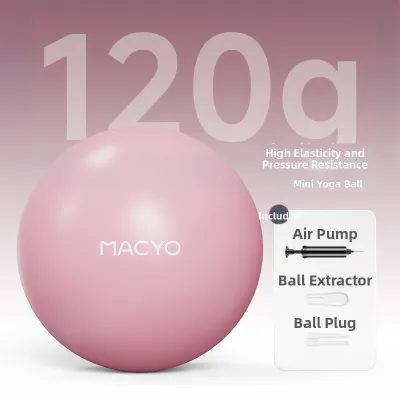
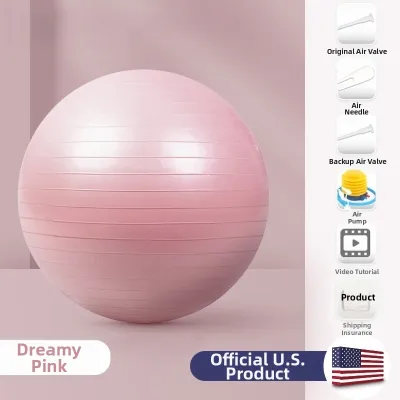
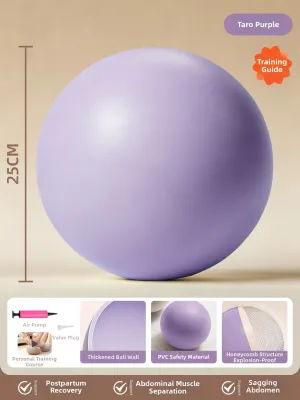
Prices are valid at publication and may change. Please refer to the product page for the latest price.
Quick Reference: Standard Yoga Ball Sizes by Height
When shopping for a new yoga ball, having a reliable baseline reference makes it easier to narrow down your choices. Manufacturers categorize these fitness accessories by their maximum inflated diameter in centimeters. The table below outlines the standard height-to-diameter ratios used across the fitness industry to help you identify your primary size category.
| User Height (Feet & Inches) | User Height (Centimeters) | Recommended Ball Diameter | Primary Activity Focus |
|---|---|---|---|
| Under 5'0" | Under 152 cm | 45 cm | General fitness, youth training |
| 5'1" to 5'7" | 155 cm to 170 cm | 55 cm | Core workouts, active sitting |
| 5'8" to 6'2" | 173 cm to 188 cm | 65 cm | Desk chair replacement, core training |
| 6'3" to 6'7" | 190 cm to 201 cm | 75 cm | Tall user fitness, deep stretching |
| 6'8" and taller | 203 cm and above | 85 cm | Extra-tall exercises, physical therapy |
These baseline recommendations are designed for general fitness, core training, and standard active sitting. While total height is the most common starting point, your actual fit will ultimately depend on your individual leg length and torso proportions. For instance, two people who are both 5’6″ might require different sizes if one has significantly longer legs and a shorter torso.
These guidelines are intended as a general consumer starting point. If you are recovering from an injury or managing chronic back pain, do not rely solely on standard retail charts. Always consult a licensed physical therapist or certified instructor to obtain professional sizing advice tailored to your specific biomechanical needs and rehabilitation goals.
The 90-Degree Test: How to Verify Your Perfect Fit
Once you have selected a baseline size and inflated the ball, you must verify the fit using a simple physical self-diagnosis test. The core ergonomic rule for any stability ball is the 90-degree angle rule. When you sit upright on the center of the ball, your hips and knees should form a 90-degree angle, or slightly greater, up to approximately 100 degrees. This position ensures that your pelvis is properly supported and that your spine can maintain its natural curves without unnecessary muscular strain.

To perform the test correctly, pay close attention to your foot placement. Sit on the ball with your feet resting completely flat on the ground. Your heels must make full contact with the floor without you having to tiptoe or strain to reach. Your knees should be positioned roughly hip-width apart, pointing in the same direction as your toes. If you find yourself sliding forward or having to splay your legs excessively to keep your balance, the ball is not supporting you correctly.
Next, perform a posture check while looking at your reflection in a mirror. Your spine should remain neutral, meaning your head, shoulders, and hips are aligned vertically. Avoid slouching forward, which rounds your lower back, and avoid overarching your lumbar spine to force yourself upright. If the ball is the correct size and inflated properly, maintaining this neutral posture should feel relatively effortless.
If your hips drop significantly below your knees, the ball is either too small or under-inflated. This low seating position puts excessive pressure on your hip flexors and forces your lower back into a rounded, vulnerable position. Conversely, if your feet cannot reach the floor flatly, the ball is too large or over-inflated. Adjust the air volume within the manufacturer’s specified limits, or exchange the ball for a different size if adjusting the inflation does not resolve the issue.
Adjusting Your Size for Desk Work and Specific Exercises
Your intended use case is a major factor that can require you to deviate from standard height-to-diameter charts. Using a yoga ball as a desk chair replacement requires a different approach than using it for high-intensity core workouts. Standard office desks typically stand between 29 and 30 inches (74 to 76 cm) high, which is designed to accommodate traditional ergonomic chairs.
If you plan to use a yoga ball at a standard desk, you will often need to select a ball that is one size larger than what your height chart suggests, or inflate a larger ball slightly less to achieve the perfect working height. The goal when sitting at a desk is to have your hips positioned slightly higher than your knees. This slight downward slope of the thighs encourages a natural forward tilt of the pelvis, which helps align your spine and makes it easier to reach your keyboard without hunching your shoulders. If you use a ball that is too small, you will sit too low, forcing you to reach upward to type, which can lead to wrist strain and shoulder tension over time.
For core and stability workouts, sticking strictly to the standard 90-degree fit is highly recommended. Exercises like planks, abdominal crunches, bridge lifts, and stability squats rely on precise biomechanical form to target the correct muscle groups and protect your joints. A ball that fits your body perfectly allows for a full range of motion while ensuring that your core muscles are engaged to stabilize your weight. If the ball is too large, you may struggle to maintain control during dynamic movements, increasing the risk of rolling off and injuring yourself.
Specific disciplines, such as Pilates or targeted physical therapy routines, may call for smaller, specialized balls that do not follow standard height charts. These smaller balls, often ranging from 15 to 30 cm in diameter, are designed to be placed between the knees or under the lower back to add resistance. When engaging in these structured programs, always follow your instructor’s or therapist’s specific sizing and usage guidance.
What to Do If Your Height Falls Between Two Sizes
It is common to find that your height lands exactly on the border between two standard yoga ball diameters. For example, if you are 5’7″ (170 cm), you sit right on the boundary between a 55 cm ball and a 65 cm ball. In these scenarios, making the right decision requires looking at a few practical rules of thumb and considering your unique body proportions.
The general rule of thumb when between sizes is to size up rather than size down. A larger ball offers greater versatility because you can safely under-inflate it slightly to lower your sitting height and increase its stability. Under-inflating a 65 cm ball so that it functions closer to a 60 cm ball is perfectly safe and actually provides a slightly softer, wider seating surface. On the other hand, you must never attempt to over-inflate a smaller ball beyond its maximum engineered diameter to make it taller. Over-inflating a 55 cm ball stretches the PVC material past its safety limits, making the surface excessively hard, reducing grip, and significantly increasing the risk of a sudden, dangerous burst.
To refine your choice further, evaluate your body proportions. If you have relatively long legs compared to your torso, you should choose the larger ball size. Longer legs require more height to achieve the recommended 90-degree angle at the knees and hips. Conversely, if you have a longer torso and shorter legs, the smaller ball size will likely provide a more comfortable and stable fit, allowing your feet to rest flat on the floor without straining. Always check the specific manufacturer’s sizing chart and guidelines before making your final purchase, as minor variations in material elasticity can exist between different brands.
Beyond Height: Weight Capacity and Safety Features to Check
While finding the correct diameter is essential, you must also evaluate several secondary safety and durability features before buying a yoga ball. These technical specifications ensure that the ball can safely support your body weight and withstand the physical demands of your exercise routine over time.
First, verify the manufacturer’s stated weight limits, which are usually printed on the product packaging or the official label. It is critical to understand the difference between static weight capacity and dynamic weight capacity. Static weight refers to the load the ball can support when you are sitting completely still. Dynamic weight capacity, which is always much lower, refers to the load the ball can support while you are actively bouncing, shifting your weight, or holding additional weights like dumbbells. Ensure that the ball’s dynamic weight rating comfortably exceeds your total body weight plus any extra fitness equipment you plan to use during your workouts. Quality fitness balls typically offer static weight capacities that can support up to 500 kg or more, ensuring a high safety margin.
Second, always choose a ball made from anti-burst or slow-deflate PVC. This safety feature is crucial for preventing sudden injuries. If an ordinary PVC ball is punctured by a sharp object, such as a staple on the floor, a small pebble, or pet claws, it can pop instantly like a balloon, causing you to fall hard onto the floor. An anti-burst ball is engineered to release air slowly and gradually through the puncture site, allowing you to safely stand up or dismount before the ball deflates completely.
Third, look for a ball with a slip-resistant or textured surface finish. High-quality balls often feature raised horizontal ribs or a matte, non-slip texture. This feature is particularly important in hot and humid tropical environments like the Philippines, where sweat can quickly accumulate on your skin and the ball’s surface. A textured grip helps you maintain stability, prevents your feet from sliding out from under you, and keeps the ball from slipping on smooth tile or wood floors. Always inspect the product packaging or the manufacturer’s official label to verify these safety specifications before making your purchase.
Frequently Asked Questions (FAQ)
How long does it take to fully inflate a new yoga ball?
Inflating a new yoga ball requires a patient, multi-step process to allow the PVC material to stretch safely and evenly. When you first unpack the ball, inflate it to approximately 80% of its target diameter. Let the ball rest undisturbed for 24 hours at room temperature. This resting period allows the material to acclimate and stretch without putting excessive stress on the seams. After 24 hours, complete the inflation until the ball reaches its designated diameter. Never force full inflation in a single step, as doing so can damage the material, cause uneven warping, or weaken the seams, which compromises the ball’s structural integrity.
Can I use a yoga ball as a full-time office chair?
While sitting on a yoga ball engages your core muscles and can help prevent static slouching, using it as a full-time office chair is not recommended. Prolonged sitting on an unstable surface forces your core and spinal stabilizers to work continuously without rest. Over an eight-hour workday, this constant engagement leads to muscle fatigue. Once these stabilizing muscles tire, your posture will naturally collapse, often resulting in severe slouching, rounded shoulders, and increased lower back strain. It is best to alternate, limiting your ball usage to intervals of 30 to 60 minutes at a time, and switching back to a supportive, ergonomic office chair for the remainder of the day.
How do I know when my yoga ball needs to be replaced?
To maintain safety, you should regularly inspect your yoga ball for observable signs of wear and tear. Replace your ball immediately if you notice a significant loss of material elasticity, deep scratches, gouges, or scuffs that compromise the thickness of the PVC. Other clear warning signs include visible bulging or warping in specific areas, which indicates that the internal structure has weakened, or a persistent inability to hold air pressure despite correct valve seating. Even without visible damage, many manufacturers recommend replacing a heavily used fitness ball every one to two years to ensure the material has not degraded from repeated stretching and environmental exposure.

Community discussion
Share your experience or ask a question. Comments are reviewed before publication.