
The choice between the Yonex Astrox and Nanoflare series depends on whether your playing style prioritizes heavy, steep smashes from the backcourt or rapid, defensive maneuvers and quick drives at the net. The Astrox series features a head-heavy balance designed to maximize power transfer, while the Nanoflare series utilizes a head-light balance to optimize swing speed and maneuverability. There is no universally superior option; the right choice depends entirely on your playing style, technical foundation, and tactical preferences.
In the humid, tropical climate of the Philippines, badminton courts can feel fast or slow depending on the ventilation and shuttlecock weight. Choosing a racket that complements your physical capabilities and tactical role is essential to maintaining control over the rally. Players who love to dominate the rear court with aggressive, downward angles will find their match in the Astrox design, whereas those who excel in fast-paced doubles defense and quick interceptions will naturally lean toward the Nanoflare.
Core Design Differences: Power vs. Speed
The fundamental engineering concepts behind the Astrox and Nanoflare series dictate how each racket behaves during a swing. The Astrox series is built around the Rotational Generator System, a counterbalanced weight distribution theory. By distributing weight throughout the grip end, the frame top, and the joint, this system allows the racket to transition smoothly between consecutive powerful shots. The head-heavy balance uses momentum to drive the shuttlecock downward with steep angles, making it easier to execute strong smashes from the back of the court.
Products mentioned in this guide
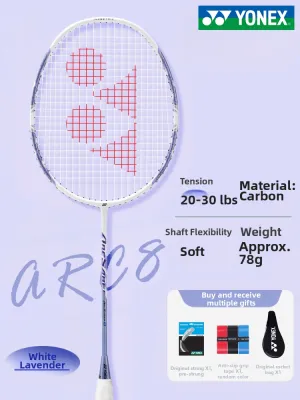
Prices are valid at publication and may change. Please refer to the product page for the latest price.
In contrast, the Nanoflare series utilizes the Sonic Flare System, which is engineered for rapid snapback and quick maneuverability. This design places high-modulus graphite materials at strategic points of the frame to improve shuttlecock repulsion and reduce air resistance. The head-light balance shifts the center of gravity closer to the handle, allowing for incredibly fast swing speeds and immediate defensive reactions. This makes the Nanoflare highly effective for flat exchanges, quick drives, and net play where reaction time is measured in milliseconds.
These structural choices directly impact swing weight, momentum, and recovery time between consecutive shots. A head-heavy Astrox racket carries more kinetic energy through the swing, which increases raw power but requires more forearm and wrist strength to stop and reset. A head-light Nanoflare racket reduces the physical strain of rapid, short-swing exchanges, allowing players to react instantly to fast drives and net drops. Understanding these differences is the first step in selecting a tool that enhances your natural strengths on the court.
Key Specifications and On-Court Feel
When comparing these two series, the physical differences translate directly into how the rackets feel during play. The balance point distribution is the most noticeable specification. Head-heavy rackets like the Astrox typically have a balance point further up the shaft, which creates a distinct heavy sensation at the racket head during a swing. Head-light rackets like the Nanoflare feel incredibly light and agile, allowing you to change the racket face angle at the very last moment before contact.

Frame aerodynamics also differ significantly between the two lineups. Astrox rackets often feature a slightly wider, boxier frame profile designed to withstand the high torsional forces of heavy smashes, ensuring the face remains stable at impact. Nanoflare rackets, on the other hand, utilize highly streamlined, compact aero-frames that slice through the air with minimal drag. This aerodynamic design is what gives the Nanoflare its signature fast swing feel, even during quick defensive blocks.
Shock absorption and vibration handling are also influenced by these design choices. Stiffer, head-heavy frames can transmit more vibration to the elbow if the shuttlecock is not hit cleanly on the sweet spot, especially during high-impact smashes. Head-light frames, while more forgiving on quick blocks, require precise timing to avoid frame vibration during deep clears. Players must weigh the solid, feedback-rich feel of a power racket against the smooth, shock-dampening characteristics of a speed-oriented frame.
| Feature | Astrox Series | Nanoflare Series |
|---|---|---|
| Balance Point | Head-Heavy | Head-Light |
| Primary Focus | Power, steep smash angles, rear-court dominance | Speed, quick drives, front-court defense |
| Frame Geometry | Boxier profile for stability and energy transfer | Streamlined aero-frame for low air resistance |
| Swing Feel | Solid, deliberate, momentum-driven | Fast, agile, effortless maneuverability |
| Recovery Speed | Moderate (assisted by counterbalancing) | Extremely rapid |
| Ideal Court Position | Rear-court (singles or attacking doubles) | Front-court and mid-court (doubles defense) |
Which Series Matches Your Playing Style?
Selecting the right series requires an honest assessment of your role on the court and your physical conditioning. You should choose the Astrox series if you play singles or rear-court doubles, rely on steep smashes, and possess the wrist and forearm strength to handle head-heavy rackets without fatigue. In the Philippines, where doubles is highly popular in local sports centers, the rear-court attacker needs a racket that can break through the opponent’s defense with sheer downward force. If your game plan revolves around building up the rally to unleash a decisive smash, the head-heavy momentum of the Astrox helps you maintain an aggressive posture.
Conversely, you should choose the Nanoflare series if you play front-court doubles, rely on fast drives, net play, and quick defensive blocks, preferring a lighter, faster swing feel. If you find yourself defending against heavy smashers, the head-light balance of the Nanoflare allows you to lift the shuttlecock or play a tight net drop with minimal preparation time. It is highly suited for players who win points through placement, speed, and forcing errors rather than raw power. The reduced physical strain also makes it an excellent option for players who want to avoid shoulder fatigue during long, multi-game sessions.
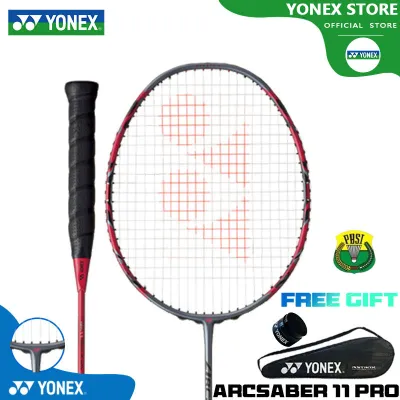
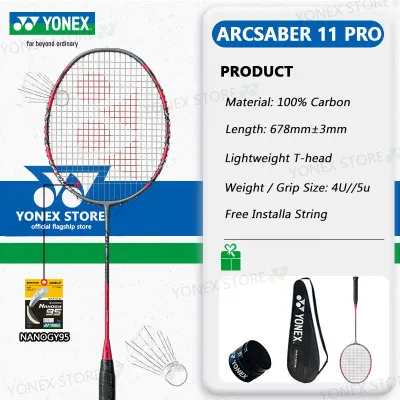
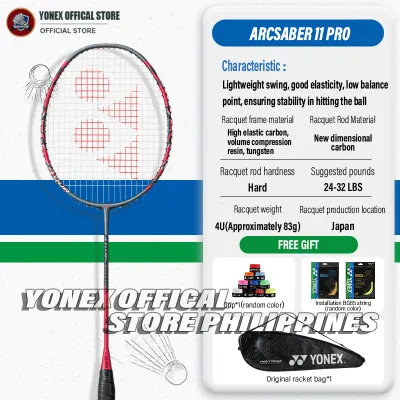
Neither series may fit your needs if you require an even-balanced, all-around racket for controlled placement and sustained rallies. If you find the Astrox too demanding on your wrist and the Nanoflare too light to generate consistent depth on your clears, an even-balanced racket is often the best alternative. Other Yonex series, such as the Arcsaber, serve this specific purpose by holding the shuttlecock on the string bed slightly longer, providing ultimate control and accuracy for placement-style players who prefer to construct rallies with precision.
How to Verify the Right Fit Before Buying
Investing several thousand ₱ in a high-end racket is a significant decision, and verifying the fit before purchasing can prevent both disappointment and injury. First, check the weight classes (such as 3U, 4U, or 5U) and grip sizes based on your personal comfort and physical strength. In hot and humid climates, sweat can make a racket feel heavier and more difficult to control over time. A 4U racket (typically 80-84 grams) is often the sweet spot for most intermediate players, offering a balance of speed and stability, while a 3U racket (typically 85-89 grams) offers more mass for power but demands better physical conditioning.
Next, verify the recommended string tension limits printed on the racket shaft to ensure compatibility with your current skill level and stringing preferences. Beginners and intermediate players should avoid excessively high tensions (such as above 26 lbs), as a tighter string bed reduces the sweet spot and increases the risk of arm strain. Ensure the racket you choose can safely support your desired tension without risking frame damage. Using a high-quality overgrip can also help manage sweat and customize the grip size to prevent the racket from slipping during intense rallies.
Before committing to a purchase, try to test the actual swing weight in a physical store or borrow a teammate’s racket. Shadow swinging in an open space or playing a few practice rallies will immediately reveal whether a head-heavy or head-light balance feels natural to your wrist movement. Pay close attention to how your shoulder and elbow feel after a few minutes of continuous clearing and smashing.
Finally, stop and consult a coach or sports physiotherapist if you experience wrist, elbow, or shoulder pain during testing or initial play. Persistent discomfort is often a sign of improper technique or using a racket that is too stiff or heavy for your current physical conditioning. Equipment should enhance your enjoyment of the sport, and prioritizing joint health will ensure you can stay on the court for years to come.
Frequently Asked Questions (FAQ)
Can a beginner use a head-heavy Astrox racket?
Beginners should generally avoid stiff, head-heavy Astrox rackets until they have developed proper stroke mechanics and wrist strength. Novice players often lack the kinetic chain coordination to generate power from their legs, hips, and torso, relying too heavily on the wrist and elbow to swing the racket. Using a head-heavy racket under these conditions increases the risk of repetitive strain injuries like tennis elbow. Starting with a lighter, more flexible, or even-balanced racket allows beginners to focus on timing, footwork, and clean contact before transitioning to a specialized power racket.
Does the Nanoflare series lack power for smashes?
The Nanoflare series does not lack power, but it generates power differently than the Astrox series. While a head-light racket does not have the built-in momentum of a head-heavy frame, its reduced air resistance allows for a much faster swing speed. Advanced players with fast arm speed and proper kinetic chain technique can generate significant smash power by accelerating the racket head rapidly at the point of impact. For players who rely on quick wrist snaps and timing rather than raw physical strength, a Nanoflare racket can produce incredibly fast, sharp smashes that catch opponents off guard.

Community discussion
Share your experience or ask a question. Comments are reviewed before publication.